Garden Plants, How and where to grow them - Trees
Beech - Fagus sylvatica - Tree / Shrub
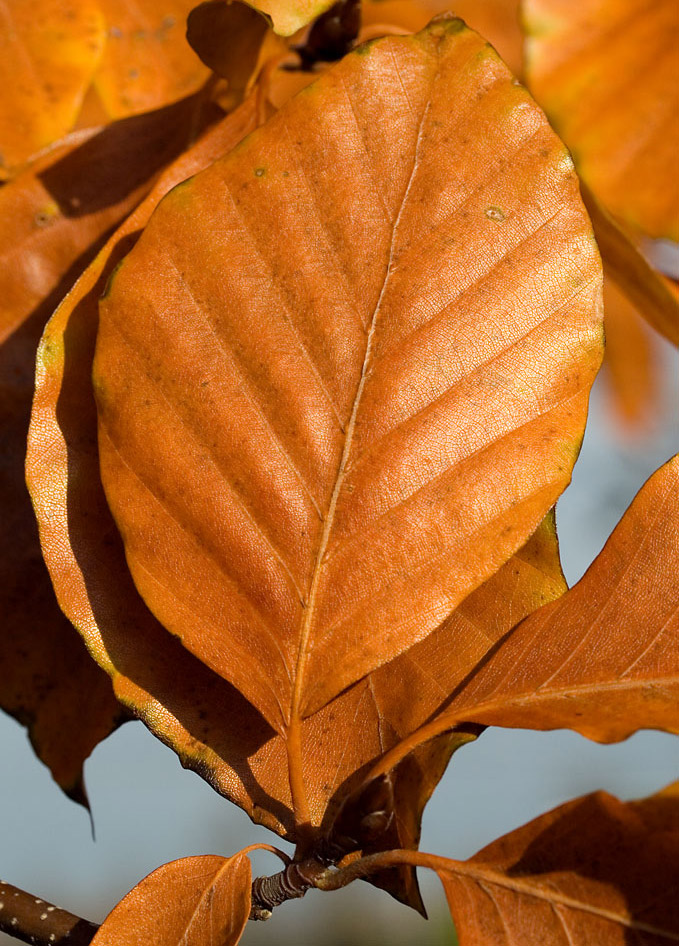
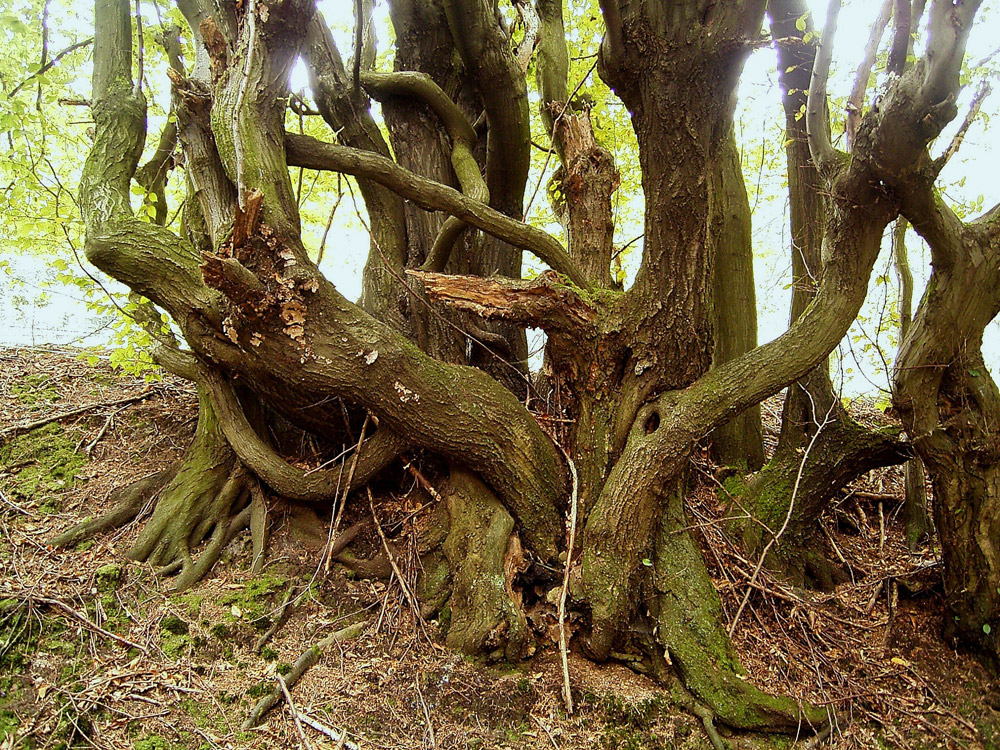
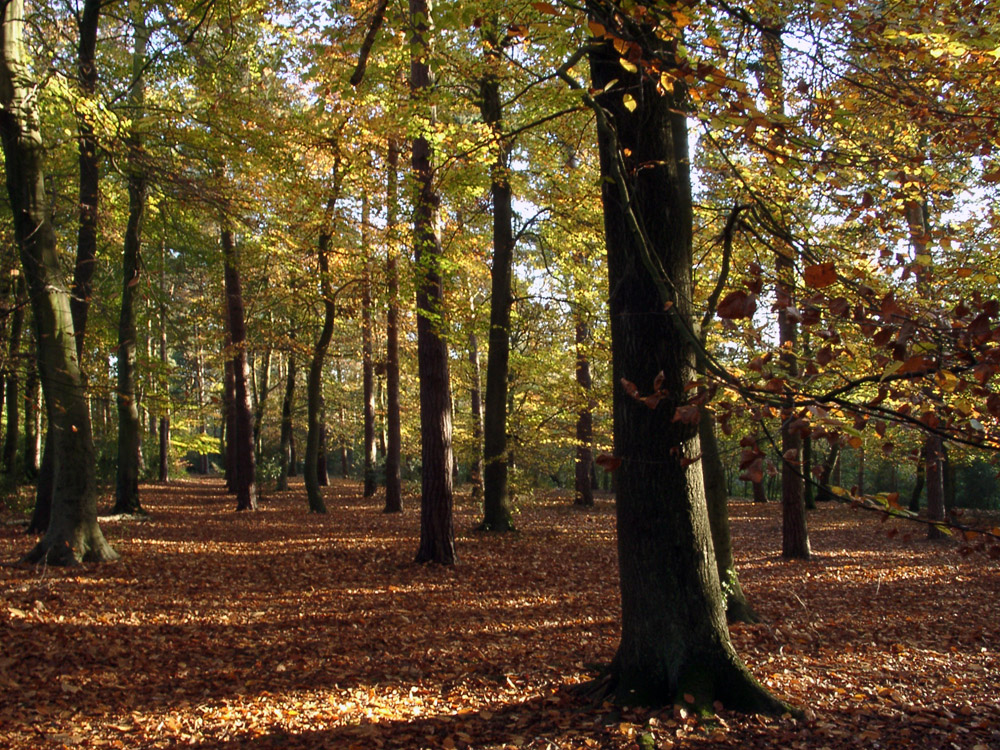
Beech - Fagus sylvatica - is a magnificent specimen tree, that needs a lot of space to be grown as such. It also takes very well to being grown as a hedging plant producing superb hedges that can be used in formal or informal settings.
 Height
and spread: Tree 25m x 15m (80ft x 50ft) |
Hedge 1-6m high (4-20ft)
Height
and spread: Tree 25m x 15m (80ft x 50ft) |
Hedge 1-6m high (4-20ft)- Position: full sun or partial shade, dark leaved better in sun, yellow leaved better in partial shade
- Soil: fairly unfussy, will grow well in chalky and well drained soils
- Rate of growth: Medium
- Flowering period: April to May, wind pollinated and not showy
- Other features: Autumn colour
- Hardiness: Fully hardy
- Uses: Hedging or as woodland / specimen tree
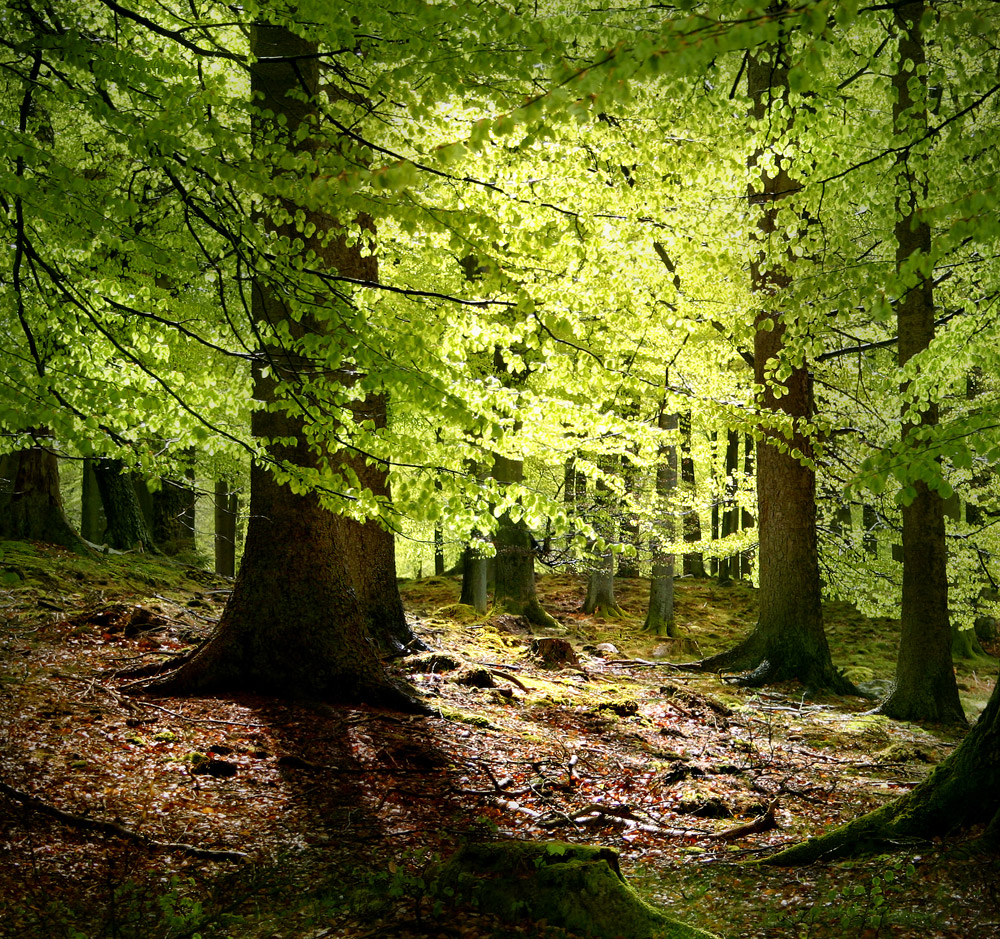
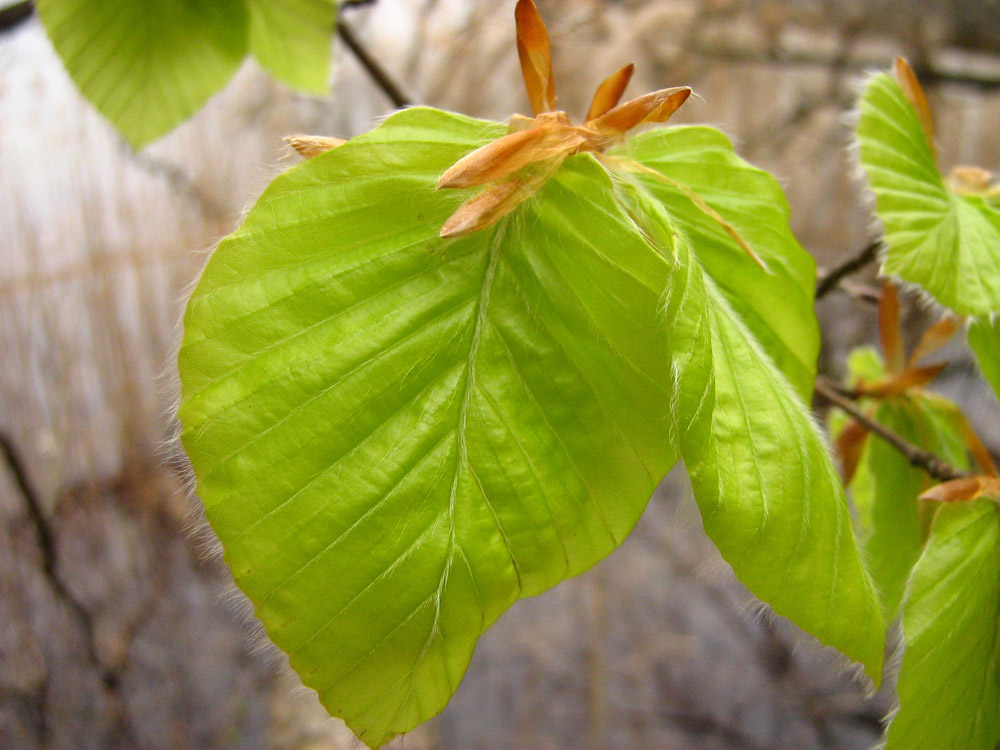
Beech hedges make effective windbreaks and sort of span the evergreen / deciduous boundary as whereas they are deciduous, they retain the dead leaves on the branches through the winter until they are pushed off by new shoots in the spring time. They are not completely bare and twiggy therefore when grown as a hedge.
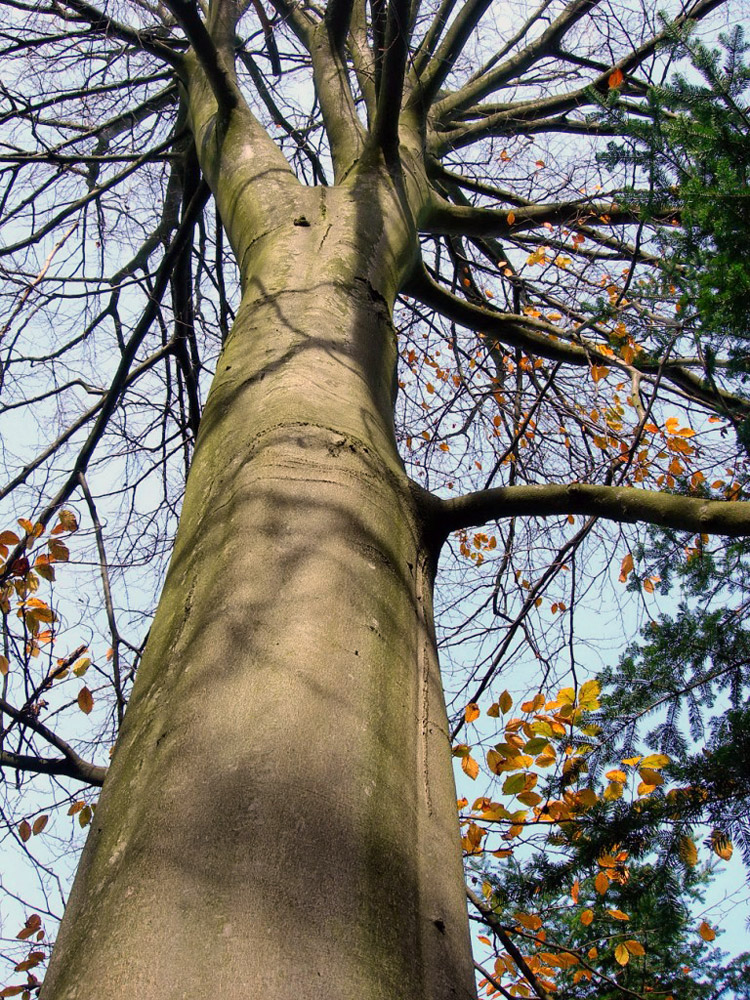
Beech also comes as purple beech or Fagus sylvatica atropurpurea which is often also used as hedging either alone or mixed in with the native type, the leaves colour in the autumn and are retained over the winter if the plant is used as hedging. Several cultivars of the tree are also available as weeping or columnar forms such as Aurea pendula - a weeping form to 30ft tall by 5ft wide with vivid yellow leaves in spring maturing to green or Dawyck Gold (to 60ft x 22ft) and Dawyck Purple (to 70ft x 15ft) both narrowly upright trees that are gold and purple leaved respectively. Beeches have smooth grey bark which is one of the best surfaces for carving lovers hearts and initials.
The plants are monoeiceous being either male or female and so will have either male catkins in spring or female trees will produce beechnuts in the autumn. When planting, incorporate plenty of organic matter into the soil and stake well if it is a large specimen to be grown as a tree. To grow as a hedge, bare rooted "whips" from around 18"-24" (45-60cm) tall are best planted in the dormant season from late autumn to early spring, again incorporate plenty of organic matter.
- Planting distance when used for hedging: 30-60cm, 12-24"
- Clipped height: 1-6m, 4-20ft
- Number of times to clip per season and when: 1, late summer, renovate in winter
- Responds to renovation?: Yes
- Pruning: Usually requires minimal pruning if trained as a tree, remove low lateral branches later on after 5 years if necessary, early removal can result in developing competing leaders.
Questions about Beech
Q. I have a beech hedge approx 8ft high. What is the best time to prune it back and do you advocate the method of cutting back on one side the first year, and then cut back the other side the following year. I also want to reduce the height, what is you advice on going about this task?
A. It depends on how drastically you wish to cut the hedge back. For general maintenance of a beech hedge, two trims a year are fine, once in midsummer and once when dormant during the winter months.
If the hedge is very overgrown then any major pruning should take place in midwinter. Leave it until then if you want to take more than about 2 feet off the height of the hedge involving cutting back into larger established branches.
The cutting one side at a time approach is only necessary for drastic pruning. If you want to reduce the width by cutting into large established branches, then do opposite sides on alternate years. If the cutting back only involves young twiggy growth it can be done in one go on both sides.
Q. My beech hedge is approximately five feet high and 25 yards long but it is very thin and sparse. How do I turn it into a thick hedge?
A. I would guess that your hedge has been allowed to grow upwards pretty much since it was planted and so the plants are trying to do what comes naturally i.e. grow like trees.
You need to stimulate it to produce more side shoots and bushy growth rather than going upwards. This is done by pruning to stimulate new growth.
Beech should be given only moderate pruning. Vigorous leaders and laterals should shortened by no more than one third of their length. Weaker growth can be cut by up to two thirds of its length. By the sounds of it this will take you some time to go down the full length of the hedge, I'd prioritise the leaders first and then go back and do the rest a bit at a time.
It would also be a good idea to fork in some fertiliser after the pruning, gromore or blood, fish and bone are good slow release fertilisers, if you have it garden compost scattered thickly at the base of the plants will be good too, don't worry so much about forking this in, the worms generally see to that for you.
Q. My beech hedge is about 8ft high. The hedge backs onto a wood so it is completely bare on that side. The front of the hedge is 4-5ft wide. I wish to reduce the height by 2ft and the width (at the front) by 2-3ft. If I cut the front by this much, all of the buds will be cut off. If I cut off all of the buds, would new growth sprout next year (as happens with pollarded lime trees for instance). Your advice would be very much appreciated.
A. Beech responds well to hard pruning and renovation, and your proposed cuts are less drastic than that. If you cut the buds off, it will obviously be a little later than normal, but will recover. In order to make up for the treatment a good mulch and a feed of a slow-release fertiliser such as blood fish and bone after pruning will help to get it growing away strongly come the spring.
Q. How do you grow a new beech hedge, from seed or cutting ? how old are the bare root plants you see for sale ?
A. The easiest way is from seed rather than cuttings, though bare rooted plants are easiest of all. The plants should be big enough when they're about 2 years old assuming they've been grown in an outdoor seedbed in at least partially sunny conditions.
Q. I have a mature copper beech tree (easily 30 years plus) which is showing signs of poor health. It is displaying what I can only describe as a white film over the leaves and the tree itself even throughout the Summer did not have much foliage. Can you recommend fungicide pesticide? Is it mildew?
A. It's difficult to say without seeing it, but it does sound like some kind of fungus, most probably powdery mildew to which beech are susceptible. It's really too late to do much about it now as the leaves will have fallen off or be about to, so it's a case of good hygiene ready for next year.
Scrub the trunk and other patches with a brush and Jeye's Fluid as far as you can reach once the leaves have fallen off. Gather the leaves as far as possible and either burn them or take them down the tip, at least get rid of them out of the garden. Whatever it is it will almost certainly re-appear next year as you won't have got rid of all traces, so at the first sight spray the leaves with a systemic fungicide and repeat at 2-3 week intervals or according to the instructions.
Q. I would like advice on the best treatment for "Beech Scale" on a new purple beech hedge. The underneath of many leaves are covered in white fluffy, sticky wool like substance.
A. You need to spray with a systemic insecticide - one that is taken into the leaf and delivered along with the food to the scale insects. The fluffy coat helps protect them from all manner of contact insecticides whether organic or not.
Q.I would like a tall beech hedge 7 foot high. Which is the quickest way to achieve this- buying smaller plants and waiting or buying taller (and more expensive ones) initially. Will the taller plants available for sale be tall but not bushy? And will I have to trim the tall plants when I've planted them?
A. There is a very quick answer to this question which is that you will have great difficulty in buying tall beech hedging anywhere - if at all.
The best way is to wait until the autumn and then buy bare-rooted hedging plants. They should be 1-2 years old and you may as well buy the largest you can as it is the youth rather the size that is the important thing. If beech hedging is left beyond this it starts to grow into a beech tree. Don't trim them until at least the late summer following the winter that you plant them.
Q. My beech hedge is 7tf tall and 30yrs old. Several feet in length of the spring leaves have turned a very dark greeny / brown, new leaf growth on the same stem is still the normal light green. the hedge was sprayed as normal in late spring for white fly.3 year ago we removed a mountain ash from near by due to honey fungi what do you think the problem can be.
A. Difficult to say without seeing it. So the older ones of this years leaves have shrivelled? Sounds to me like the effect of the sun/heat that we've been getting this summer, I have a few plants in my own garden that have suffered in a similar way.
Keep an eye on them , but in the meantime I'd give the plants a bit of a treat to try and build them up a bit, give a good long drink with a soluble fertiliser and apply a good deep mulch around the base of the trunk.
It could be the honey fungus, check the trunks for any signs, but I think the weather is probably more likely to blame.
Q. How do you grow a new beech hedge, from seed or cutting ? how old are the bare root plants you see for sale ?
A. The easiest way is from seed, the plants should be big enough when they're about 2 years old assuming they've been grown in an outdoor seedbed in at least partially sunny conditions. Having said this, bare rooted plants will be available from late autumn onwards from specialist nurseries and online and are the best bet to save yourself year or two in time.
Q. We planted a copper beech hedge earlier this year, it has taken off really well, I have read about pruning on your site, but please tell me what 'renovation' means and entails.
A. Renovation as applied to plants is pretty much what it is when applied to houses. It's what you do to old established plants that are fundamentally sound, but are showing the effects of age and some neglect. As such, you probably won't need to worry about it with your hedge for a few decades and not even then if you look after it properly.
Q. We planted a mixed beech hedge, purple and green a few years ago. This year we have noticed what appear to be blue aphids of a downy consistency on the undersides of the leaves and a sticky residue. They first appeared on four new saplings only planted in Autumn 2001 but have now spread to all the plants. What could this be? Are there blue aphids and if so how should this be treated? (Geneva France)
A. Aphids come in all kinds of colours, I've never seen blue ones, but I'm prepared to believe that they exist!
The cure is more straightforward, you need to buy some systemic insecticide and use some kind of sprayer to apply it. Systemic means that it is taken up by the leaves and then passed around the plant internally so the bugs then suck up the poison with the plant juices. If they're downy, this will usually make it more difficult for contact insecticides to have an effect, systemics don't have the same problem.
Photo credits: (numbering left to right top to bottom) 1-Malene Thyssen Creative Commons 3.0 Unported license / 2-public domain / 3-Andrew-Dunn Creative Commons 2.0 generic license / 4-Frank-Vincentz Creative Commons 3.0 Unported license / 5-Lukasz-Smolarczyk Creative Commons 3.0 Unported license / 6-public domain / 7-Rasbak-from-nl Creative Commons 3.0 Unported license
 Custom Site Search
Copyright 2000 - present. All Rights Reserved | Privacy Policy Statement