Garden Plants, How and where to grow them
Tree
/ Hedging Plants
Leyland Cypress - Tree / Hedging Plant
Cupressocyparis leylandii
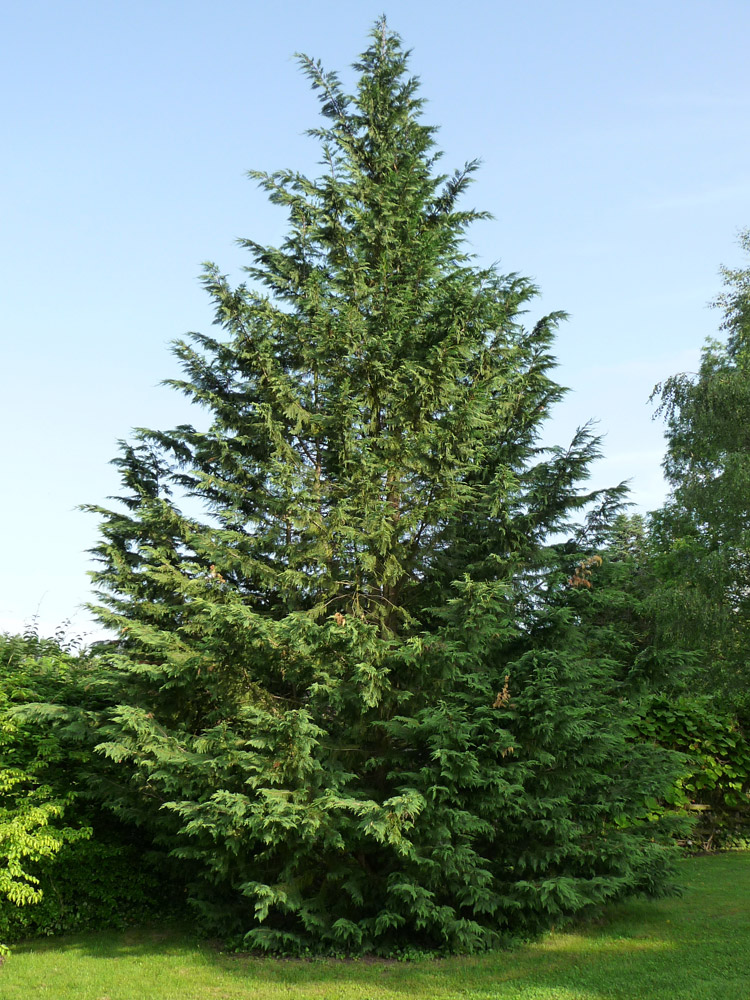
The Leyland Cypress is a forest tree, hybridized over 140 hundred years ago in a park from two naturally geographically distant species.
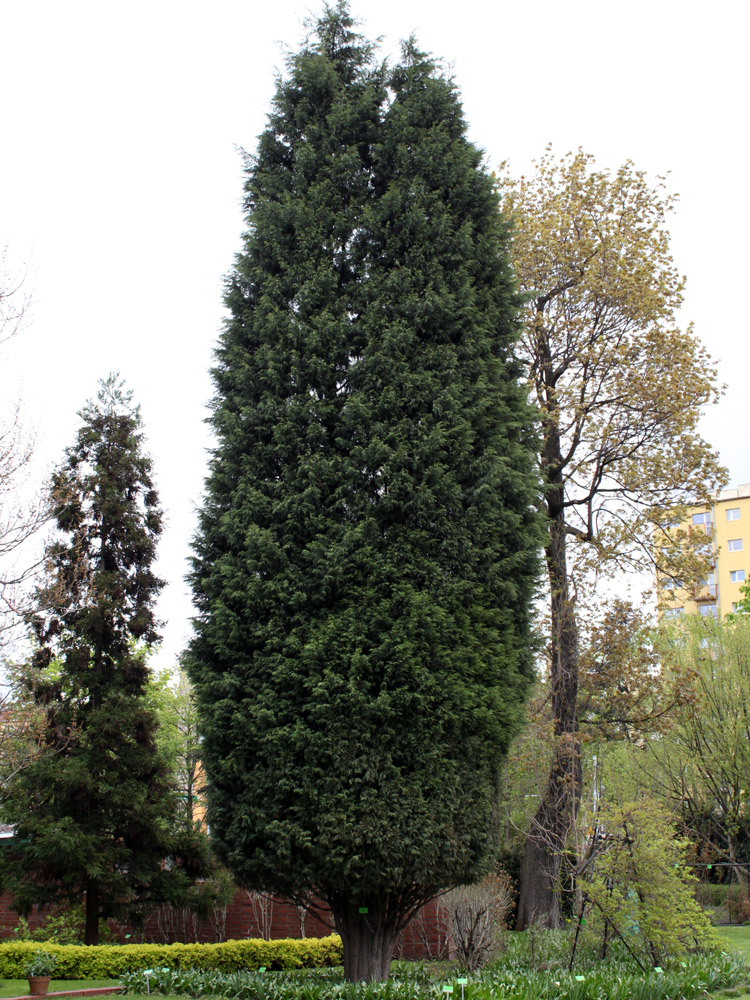 This is one of the most notorious plants growing in
the UK due to all to often being planted inappropriately in
small gardens. If someone suggested that any other
large tree was planted in close proximity to housing, then the
owners would have a dicky fit. Somehow, this one doesn't
seem to cause the same amount of panic. Maybe it's feathery
leaves and the way it waves around sort of vulnerably when small
along with large spaces between the branches mean that it seems
more harmless.
This is one of the most notorious plants growing in
the UK due to all to often being planted inappropriately in
small gardens. If someone suggested that any other
large tree was planted in close proximity to housing, then the
owners would have a dicky fit. Somehow, this one doesn't
seem to cause the same amount of panic. Maybe it's feathery
leaves and the way it waves around sort of vulnerably when small
along with large spaces between the branches mean that it seems
more harmless.
If you plant this tree as a hedge, it will require regular maintenance. If you don't keep it under control, it will grow away to the point where the removal of the excess growth becomes a considerable task, both in cutting it down and also in the disposal of the foliage. On the other hand it will very rapidly form a dense and effective hedge that remains green all year round - just don't plant it in a small garden!
- Height and spread: 120ft (35m) x 15ft (5m), more typically to 65-80ft (20-25m)
- Position: full sun to partial shade
- Soil: moderately fertile, moist but well drained. Will grow in most soils, but not anything that is wet or waterlogged.
- Rate of growth: vigorous, up to 1m per year - you have been warned! - nor will it stop in your lifetime!
- Other Features: contact with the foliage may aggravate skin allergies. Also available as some named cultivars, most commonly "Castlewellan Gold" syn. "Galway Gold"
- Hardiness: fully hardy. Good in exposed, windy and in coastal conditions.
- Uses - Hedging / Specimen Tree, makes an excellent large windbreak.
- Planting distance when used for hedging: 75cm, 30"
- Clipped height: 2- 4m, 6 - 12ft. can be larger, to 6m - 20ft and beyond
- Number of times to clip per season and when: 2 - 3, growing season
- Responds to renovation?: No
- Pruning: Little and often is
the key, that way it doesn't get carried away and give
you a massive job to do that you might put off, when it
gets bigger, when you might put it off and it gets bigger...
you get the idea.
Doesn't respond very well to drastic renovation, though it is possible to remove large amounts of growth without harming the tree other than visually. The key is to not cut back into brown wood with no green foliage on show. If you do this it will almost certainly never recover. I have cut these down to about half the height and removed a substantial amount of the width without damage. However I have also seen plenty of examples of where people have tried to do too much and either ended up with one side green and the other side permanently brown or have lost the plant completely. If you have a huge one to deal with, maybe it might be a good idea to think about total removal, cutting down to your preferred size will almost always result in a permanently odd-shaped tree.
Questions about Leyland Cypress, Cupressocyparis leylandii
Q 1. My neighbours Lleylandii is now 15ft high and growing about 3 ft a year! I have asked him to cut this down to a reasonable height of about 6ft which he refuses. He actually pulled up trees under a TPO (tree preservation order) 6 years ago and planted these monstrous green things and now the view of the valley is totally ruined. What is the current legislation regarding this and if all else fails how do I get rid of them?
Q. 2 Hi. I have spent years developing my little garden into what is now a very enjoyable and functional environment. A few months ago my neighbour planted eight Lleylandii conifers against the other side of my 6ft fence panels. I am very worried about the speed at which they have grown (8ft now) , and about their ultimate potential to take the light (and views) from my hard-earned garden. I get on well with my neighbours, but do not want to risk causing any bad feelings about this situation. Is there any legal requirement for the guardians of these amazing trees to keep them within a specific height (in a small garden) ? I also use my garden for amateur astronomy, and the Lleylandii will eventually make that impossible. Is there a neighbourly way of sorting this matter, avoiding the common "Neighbours from Hell" saga which ruins so many friendly neighbourhoods?
A. The Trees and High Hedges Act 2005 applies:
-
where there are 2 or more trees or shrubs over 2 metres high above ground level and which act as a barrier to light; and
-
where the reasonable enjoyment of part or all of a property, including a garden or part of a garden, is being adversely affected by a tree or high hedge that is situated on neighbouring land; and
-
where the land which is being adversely affected is a domestic property.
The Act applies to owners and occupiers (for example, tenants).
If there is an issue that cannot be solved amicably, then you can make a complaint to the Department for Communities and Local Government who has the power to serve notice on the owner or occupier to take action. This will require a fee however of a few hundred pounds.
The Department for Communities and Local Government will generally not proceed with a complaint if it is of the view that:
-
the owner or occupier of the land which is being adversely affected has not taken all reasonable steps to resolve the issue with their neighbour; or
-
the complaint is petty or the purpose of the complaint is simply to cause problems for the owner or occupier of the neighbouring land.
So it is in everyone's interest to solve the issue amicably, though there is now a requirement on the owner or occupier of the land to take action, they cannot simply ignore it.
Trees blocking light - legal information link
Q. I have a 30 year Lleylandii hedge. I have kept its height to about 3 metres, but it seems to be getting wider each year. I have now decided, enough is enough. Can I cut the branches back to the trunks, and use these trunks for supports for clematis, climbing roses etc, or would the Lleylandii trunks sprout again?
A. It's unlikely that they would sprout again. If they did so, they would do it slowly and weakly and would certainly give up totally if snipped off a second time. If there are any straightish branches of any length that you can salvage when you cut them back, they make good cross-members nailed to the vertical trunks and present a suitably rustic image.
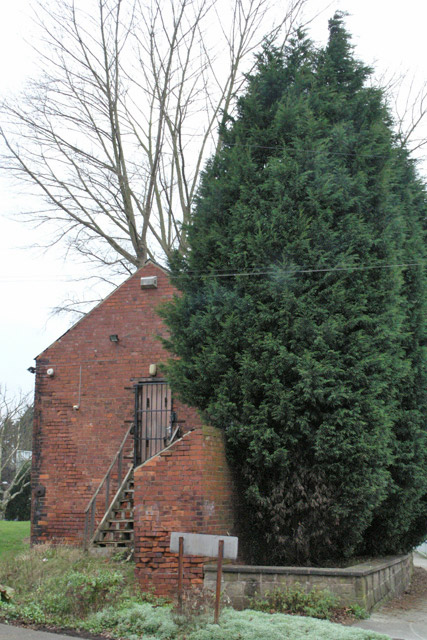
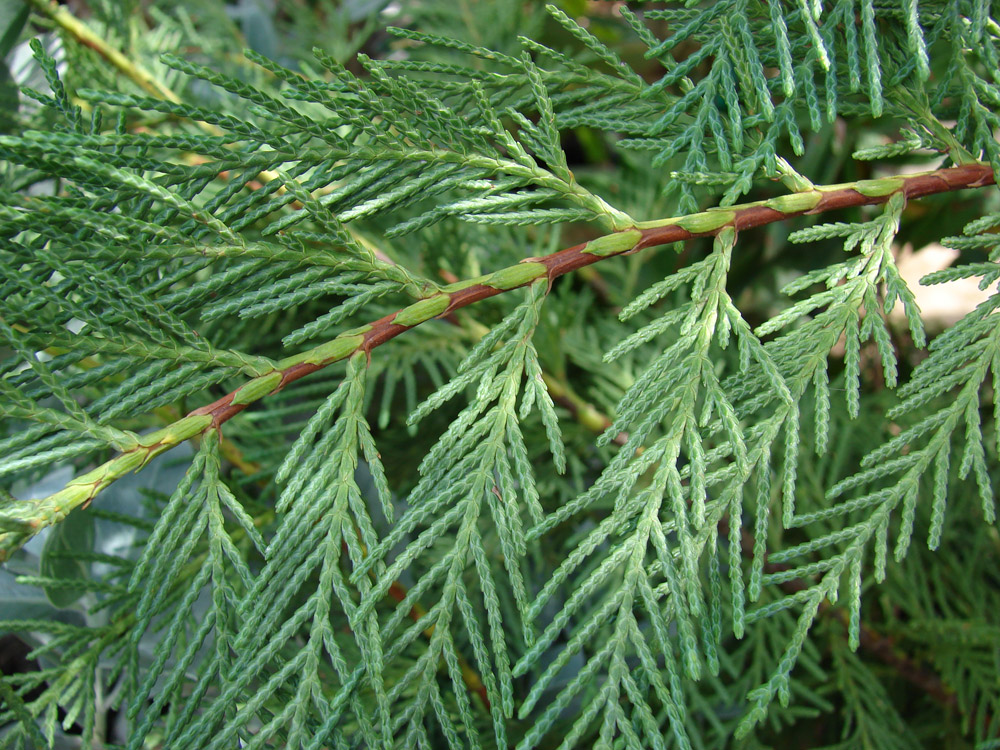
Q. How do I stop my Lleylandii conifers from growing, they are now approx 30 feet high and are blocking light
A. The honest and only answer - cut them down. 30 feet for a Lleylandii isn't even a teenager. All you can do is to regularly (twice a year) trim them back and getting to 30 feet each time will probably be quite difficult.
Q. Can I cut back a Lleylandii tree half matured to make a hedge, and what time of year is best?
A. It depends on how big the tree is and how far back you want to cut it. Lleylandii like many other conifers have green leaves on the outside only, once you cut back any distance into it, you just have brown branches. If the tree is quite large it is unlikely to grow green shoots again from the brown wood. I have seen it happen, but it took about three years from being cut, during which time the hedge was an ugly bare brown. Conifers that have been grown as trees usually respond to drastic cutting back by giving up the ghost completely. You could always plant a laurel in its place and then train that as a hedging plant. Laurels have the advantage that they will respond to drastic cutting back by growing new green leaves from the bare brown wood. If you want to have a go at it, I'd do it in late spring / early summer.
Q. I have a problem with some 40ft Leylandii - 12 in all. As they are killing just about everything within 5 m of them how can I best get rid of them? Do I: I have been told these methods:
1 - Cut them down to 1' under ground, drill a hole in
the stump, pour acid in and cover them over allowing them to
rot down. Apparently this doesn't affect the soil around
them and is the non disruptive method.
2 - Dig up the
roots but this apparently makes lots of mess because you have
to dig round them, or is there a better way?
Q. I have six Lleylandii conifers located at the bottom of my 40' garden. A surveyor friend of one of the other flats owners visited the property a couple of days ago. Although she didn't speak to me about it directly she subsequently mentioned that she had a slight concern about the conifers at the end of the garden as "they needed to be kept in check due to the risk of subsidence". Obviously I don't want to cause a problem for myself or my neighbours and will do whatever is necessary to keep these from being a problem. The tallest is approx 20' so my question is can these trees cause a problem to our property although they are located 40' from the house? Any feedback would be greatly appreciated.
A.
It's part of the culture where no-one puts themselves at
risk by always being as careful as they can in case some-one
else tries to prove them liable for the consequences of advice
or information given.
With most trees, a distance at least as far as the tree is tall will be ok in most circumstances. There's a possibility that they could be left and reach 100ft + in time, so yes there is a risk. Make sure they're kept trimmed and that your buildings insurance covers you for subsidence and you should be fine.
Q. I just bought 15 Leyland Cypress trees and am debating about their spacing and distance from the fence (chain link). I realize that the most commonly recommended distance between trees is around 80cm., however I have all too often seen conifer hedges choking each other (apparently) from too-close spacing and/or being too close to the fence. Since a Leyland Cypress can supposedly grow to 3 or 4 meters wide, would there be a problem spacing them at 150 centimetres rather than 80?(How much longer will it take to form a dense closure?) Thanks Very Much! (from Spain).
A. The recommended spacing is to
achieve a good dense barrier fairly quickly while giving each
tree an adequate amount of space (they might look "choked"
but they're fine for a hedge). The main reason for choosing
Lleylandii is for their growth rate. It's difficult to give
a time scale of how long it would take to form a good hedge
at 150cm spacing other than about twice as long as it would
at 80cm, local growth conditions vary enormously and I'm
not even going to guess how quick they'd grow in Spain!.
I'm not keen on the use of Lleylandii and my own approach
would be that if you are prepared to wait longer for the hedge
to form, then why not use a more attractive and less bullying
hedging plant instead (at the recommended spacings).
Q. When we moved into our house we had a lovely Lleylandii hedge along the front of the property and between us and our semi-detached neighbours. It's approx 6 ft high and shaped to a point at the top from 4 ft up. Despite initial reservations we've managed to keep it up ourselves, with one/two trims a year but the other night some stupid idiots thought it would be fun to set fire to the hedge. Luckily our neighbours noticed and called the fire brigade but we now have a burnt out patch from 4 ft up and it's about 3 ft wide. Any advice on the best way to get the hedge back to it's former glory would be most appreciated. Basically all the green has gone, but the main branches in the centre of the hedge remain - albeit some are pretty charred.
A. Lovely and Lleylandii are not two words I often hear in the same sentence in emails! Lleylandii very rarely grow again from brown wood, I have seen them do it, but it takes 2-3 years, the chances are that they will die, your best bet is probably replacement with a new plant/s if the burnt parts are down to ground level If there's a good healthy portion below the burnt part, then cut out the burnt/brown region and train a new leader when one emerges from the lower portion, it shouldn't take too long to fill the gap with a bit of judicious training and pruning.
Q. I have been growing
Cypress Lleylandii as a hedge for about 7 years. My problem
is that the ones on the ends are about 5 feet
taller than the middle ones. I understand that Lleylandii
do not take fertilisers well, but would like to encourage the 'short
ones' to grow taller, any suggestions on how to encourage
their faster growth? Thank you for your kind attention to my
question.
A. Give them a top dressing of a slow acting fertiliser in the autumn - now is ok as long as it's not frozen - hoe it in to the top inch or two of the soil. Use blood, fish and bone, seaweed based or Gromore depending on your preference. Give them a good soaking with a soluble high nitrogen fertiliser in April / May when they're growing strongly.
Q. I have a hedge of Lleylandii which has been on our property since buying it. Recently the hedge has started to fade. It started with a couple of trees and is now progressing down the line of trees. There seems to be an awful lot of ants at the base of the trees in question. Could you please advise me of any diseases connected to these trees, as I know that they are considered to be extremely hardy.
A. Difficult to say without seeing the plants directly. The ants may be a clue though. There is an aphid that particularly attacks Lleylandii, it's not common, but if it strikes is often in huge quantities - take a look for them. The ants might be feeding on the honeydew that the aphids secrete and taking them to new pastures - they actively farm them. Other than this, they sometimes suffer from a fungal disease called Phytophthora which affects the bark and gives a reddish tinge to the roots. Apart from these, the commonest cause of dieback is drought, something that Lleylandii like other conifers are often not good at tolerating, damage to the roots could be a cause too.
Q. I planted 30 Leyland Cypress
in a fence row style to be a hedge. I do not
want them to grow taller that 5 to 6 ft. My soil is not
the best and they have been in the ground 2 years now. Most
of them are about 4 ft tall but one end is shooting to the sky.
I have different growing heights and want to top off the new
growth and keep them with in the 5 to 6 ft height? Can I do
that or do I just need to let them grow? I will be doing no
side to side trimming just off the top. If I can top these trees
can you root these cuttings for more trees? If so how? Can I
cut them now (October) or do I wait until spring?
A. The first thing I want to say to anyone else who is reading this is that if you want a 5-6ft tall hedge - Don't plant Leylandii!
Just cut them off when they reach 6 ft, if you let them they'll
continue to 70ft+! You will need to do some side trimming as
they get older or they'll end up huge, best to do little
and often. Yes you could use the shoots to take cuttings, 6-12"
long pieces in a cold frame ideally with the foliage stripped
from most of the length save the top 1/3rd. They'll take
better if there's some sand mixed in with the soil. Put
them in now and don't touch them again until late spring
at the earliest. They need to be kept moist enough to not dry
out, but not so wet that they rot. How well they take will depend
on your local conditions, if you need them or just want to try,
take some every time you trim them, they're free, will be
in great abundance (!) and you'll learn by trial and error.
You can cut some for cuttings now, but I'd leave any proper
trimming until they're in active growth again next year.
Q. I have just purchased a new house and have 3 Lleylandii at about 7ft currently. I am keen that they grow (!) and wondered if they needed any feed or will water suffice in these relatively dry conditions? Also do you know anything about wild garlic. Some friends came around at the weekend at it seems our garden is infested with it. To my untrained and inexperienced eye it looks very pretty but they tell me it's dreadful stuff for the garden! Help!
A. Lleylandii - I wouldn't start watering them, you'll end up making a rod for your own back, if they've got to 7 feet, they should be ok. Feeding, hoe in some blood, fish and bone meal or Gromore around the roots any time now. Once they're growing well in April, give them a dose of high nitrogen soluble fertiliser. Wild garlic - all areas have their own particular weeds/wild plants that proliferate in local conditions. The only way I can think it's "dreadful stuff" would be in the same way as any other weed by taking over if not kept in check. If you let it, it will overpower many of your ornamental introductions. Should you keep it? Depends on how much you like it and how it fits into the scheme of things in your garden, some weeds/wild plants look pretty for some of the time when they're flowering and then ugly for much of the rest, when they are often brown and flop all over the place.
A. I'm afraid I'm not going to be able to help much either on this one. I'm actually a bit surprised that Lleylandii will grow in Jordan at all, and I think that therein lies the problem. Conifers in general are very susceptible to drying out and Lleylandii are temperate trees rather than being able to put up with hot dry conditions like some other conifers can. Lleylandii are better in our damp European climates as they can get through wet winters which usually means they won't manage too well with very hot and dry places.
Conifers are also a bit sneaky in the way they die as they don't tend to show any outward signs until they are well gone, unlike broad-leaved plants that wilt early on to show there's a problem. So they might die due to of a lack of water or because of excessive heat, but not show it until at a time when they appear to have plenty of water and it's cooler. I'm struggling a bit here and you may well be surrounded by lots of other healthy Lleylandii in Amman, but that's my best suggestion. They may have lasted so long as a result of their position and water availability so far as they were smaller, or you may have had a particularly long hot and dry spell recently.
On the other hand, it could be a disease, and there I'm not even going to guess as I'm sure you have things I've never some across! I also imagine you would have mentioned anything obvious.
The answer? I'd be inclined to get something more native to your region and go with that, if nothing else, you know there's something about where they are currently planted that kills Lleylandii.
Q. We have lost 5 Leylands this summer, they turned all brown. There is a brown/blackish caterpillar type larva that has wrapped itself in a cocoon with the leaves of the tree. How to we stop this? Are the trees gone for good? Cartersville GA, 30120 - zone 7
A. It's difficult to say without actually seeing the trees. If conifers die as you describe, it's almost always due to a lack of water and/or high temperatures depending on the species.Unless the trees are overwhelmed with the caterpillar you describe I'd guess it's an opportunist taking advantage of a weakened tree rather than the cause of the problem.
Lleylandii are tough as old boots in a climate where they are happy, but a bit temperamental if they are not happy - and lack of water at the roots is usually the problem (or an excess of it in the winter). Maybe you have another 100+ trees that are perfectly happy, but it sounds to me that they just aren't so great in Bartow County GA. It only takes a few days of too-tough conditions in a long life-time of a conifer to sound the death knell.
Q. I am considering purchasing a
new house (bungalow) in Clacton. 2 metres away
in a neighbours garden is a 8-10m Lleylandii. A previous sale
fell through as the owner refused to cut the tree down.
Is this likely to cause problems to my new house? Can
I dig down and prune the roots on my side of the fence? I understand
that Leylandi roots are shallow. Will pruning of the roots protect
my house. Could I dig a shallow pit (1 metre) on my side of
the fence and concrete it in to protect the house? A surveyors
report on slight cracking in the wall on that side said that
it was due to thermal expansion of the bricks and was not due
to the tree. There was no damage due to the tree.
A. With advice goes liability and as I haven't seen the tree, garden, house, bungalow etc. I can't give direct advice as to what you should do. However:
- Is it likely to cause problems? - statistically probably not, but even a 1% chance means someone has a big problem even though the other 99% don't.
- Yes you could dig a trench and prune the roots, I don't know about the sunken concrete wall as I've never come across this, either option is an awful lot of work.
- Damage to property by trees is usually not by direct damage to the foundations by the roots (though this can happen), more normally it is by soil shrinkage/swelling through the year by the tree roots taking water from the soil. This is worse on clay soils, least on sandy, worse with a big tree and worse the closer the tree is.
- You say tree - singular, i.e. not a hedge? Are the branches 2m away, or is the trunk 2m away? You can get the local authority involved if it's a hedge, see link above.
- I'd suggest getting a local expert to take a look at the tree and bungalow on the spot, maybe even approach an insurer as to whether they would happy (or at least not grumpy) about taking on buildings insurance in such a situation.
Q. We have a Lleylandii hedge close to an outbuilding. Cracks are beginning to appear in the building and we believe this is subsidence due to the trees. We are loath to remove the tress completely because of the screening they provide. Would reducing their height by half (down to approx 8ft) have any significant effect?
A. Yes - trim the branches back too as I bet they're wide with it. Don't leave anything brown as they'll never recover, it should still all be green.
Q. Do Lleylandii roots spread, we have one positioned right next to our house (in our neighbours garden) and were concerned about our pavement rising, the neighbour looked but said the roots of a Lleylandii do not spread it is a root ball!? Is this correct?
A. All tree roots spread, some more than others, the bigger the tree the more they spread. "root ball" is just a phrase to describe the roots and attached soil. Will the roots raise your pavement? maybe, maybe not, too many factors to take into consideration to guess at, but certainly if the tree is next to (immediately next to) your garden, then the roots will go under it and it is a possibility.
Q. Can Lleylandii be kept in large pots?
A. Yes they can, but I doubt you could keep up with the required pot size and re-potting requirements, not to mention watering needs. They will be ok for a few years but not for longer than this when you will need to put them in the ground or send them to the compost heap. I suggest you don't try unless there is a particular reason to.
Q. I have just moved to France and our new home unfortunately is close to a motorway at the rear of the property. I am going to plant Cupressocyparis Lleylandii. Unlike everyone else who is trying to stump its growth, we would like the opposite, to grow as quickly and as tall as possible. How can I encourage it to do so? thanks.
A. Prepare the planting hole well with plenty of organic matter and add some slow-release fertilizer, blood, fish and bonemeal or Gromore. Water them in well and baby them through the first summer, a good soaking once a week in dry weather - nothing more often as they'll get used to it and you'll make a rod for your own back. Keep the area around them free of weeds and grass to at least a foot from each stem, a good mulch of organic matter / bark chips or similar will do the trick.
Photo credits: (numbering left to right top to bottom) 1-Crusier3 - Creative Commons Attribution 3.0 Unported license. / 2-David Lally2 - Creative Commons Attribution 3.0 Unported license. / 3-Forest Kim StarrLLey - Creative Commons Attribution 3.0 Unported license. / 4-Keith Edkins - Creative Commons Attribution 2.0 license. / 5-Steve Daniels - Creative Commons Attribution 2.0 license. / 6-Tim Heaton - Creative Commons Attribution 2.0 license. / 7-W Baumgartner - Creative Commons Attribution 3.0 Unported license.
 Custom Site Search
Copyright 2000 - present. All Rights Reserved | Privacy Policy Statement